Sep 26, 2026Sensor & Safety Notes
Choosing an Escalator Sensor: One-Way Detection Explained
Escalator and one-way sensors must detect only approaching people and ignore everyone leaving. How unidirectional microwave detection works and where to use it.
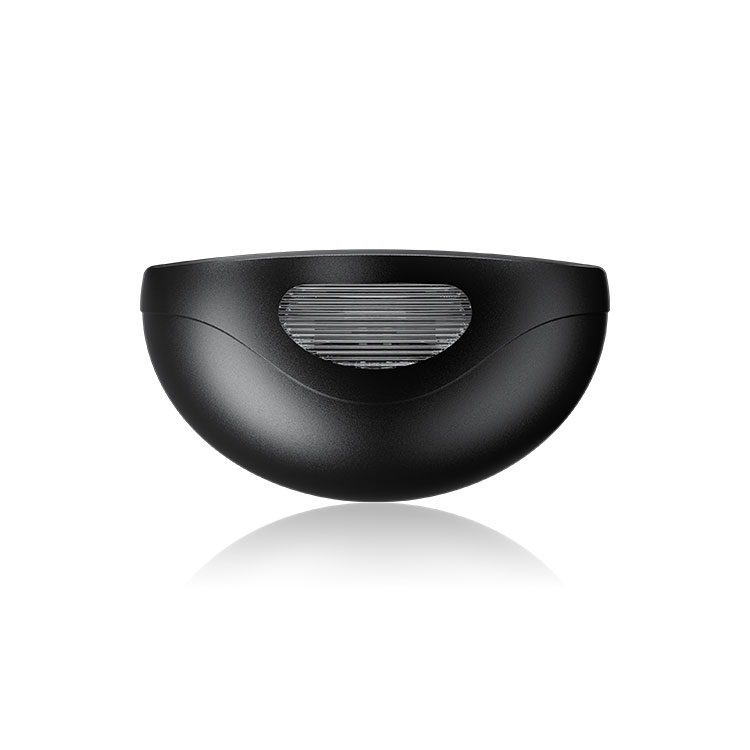
Some entrances need the door to open only for people coming towards it. A customer leaving should not trigger the entrance again; on an escalator approach, a person walking away should not be detected at all. This is the job of unidirectional, or one-way, detection.
What unidirectional detection does
A unidirectional microwave sensor detects movement towards it and ignores movement away. It works on the same Doppler principle as a standard microwave sensor, but the detection logic is configured to respond to the approaching signal and to shield the departing one. That single behavioural difference is what makes it the right device for escalator entrances and one-way door installations.
Where it belongs
Escalator and moving-walkway approaches are the classic use, where a sensor must open or activate for people arriving without reacting to everyone leaving. One-way door installations use the same logic, as do entrances where a public footway passes the door and approaching-only detection avoids nuisance openings. The common thread is an entrance where the direction of travel carries meaning.
Mounting and aiming
Unidirectional sensing depends on the sensor's orientation, so aiming is the critical installation step. Mount it so the detection field faces the approach path and the shift in frequency corresponds to movement towards the door. Correct height and angle matter more than usual here, because a misaimed unidirectional sensor can behave like a poorly tuned standard sensor. Check the specified mounting height and detection area against your actual position.
What it does not replace
Unidirectional detection is an activation function. It does not provide presence or safety protection inside the door area, so a door using unidirectional activation still needs safety sensing for the leaf path. Where the door also needs to detect people standing still, an infrared presence sensor or a safety curtain belongs in the design alongside it.
Specification checks
Confirm the mounting height the sensor is rated for and the detection area at that height. Confirm the sensitivity adjustment is present and usable, because outdoor and high-traffic positions usually need it. And confirm how the sensor behaves in the environment it faces: escalator approaches can have strong air movement, which is worth planning for rather than discovering.
Unidirectional sensing and pedestrian flow
Direction-sensitive detection is most valuable where a door sits in a flow of people rather than at the end of one. An escalator approach, a concourse entrance and a footway-facing door all have the property that many of the people in the detection field are not customers. Reacting only to those approaching removes the great majority of unwanted activations without reducing the response to genuine arrivals.
The same logic is useful on one-way doors in circulation systems, where the door should respond to people entering and not to people leaving. In both cases the sensor is doing a filtering job that a standard sensor cannot, and the filtering is what justifies the dedicated model.
When unidirectional sensing is the wrong choice
If the entrance genuinely needs to detect people in both directions, a unidirectional sensor will behave like a faulty standard sensor: it will appear to miss people who approach from the wrong direction, which is exactly the population a two-way door must serve. Likewise, a position where the approach path is short or where people appear at the door from the side rather than head-on gives directional detection little to work with.
The check is straightforward: describe the path people take to reach the door, and ask whether direction is meaningful there. Where it is not, a standard sensor with a well-aimed field is the simpler and more reliable choice.
Frequently asked questions
What is the difference between unidirectional and bidirectional?
A unidirectional sensor reacts only to movement towards it; a bidirectional one reacts to movement in either direction. Direction matters when an entrance should respond to arrivals but not departures.
Can one-way detection be adjusted after installation?
Orientation, height and sensitivity are usually adjustable, which is how the behaviour is tuned. Adjusting after installation is normal, so confirm the sensor exposes those controls.
AURWEN supplies unidirectional microwave sensors for escalator and one-way door applications. Tell us the approach and the mounting position and we will suggest a model.