Sep 26, 2026Sensor & Safety Notes
How to Select Safety Curtains for Full-Door-Leaf Protection
Safety curtains watch the whole door leaf, not just the approach. How beam spacing, height protection and reaction time decide whether a curtain actually protects.
Activation sensors decide when a door opens. Safety curtains decide whether it is safe to let it close. On any automatic door that people walk through, the second job is the more demanding one, because a miss does not just cause an inconvenience; it causes an injury.
What a safety curtain does
A safety curtain projects a set of beams across the width of the door opening, maintaining a detection field while the leaf is in motion. If any beam is interrupted, the operator holds or reopens. Because the beams cover the full opening rather than a single point, the curtain detects a person at any position across the doorway, including someone who has stopped rather than walked through.
Beam count and beam spacing
The number of beams and, more importantly, the spacing between them decides what the curtain can detect. Wide spacing can leave gaps a low object or a small person slips through; tighter spacing across the full height gives more consistent coverage. Check the specified detection pattern rather than the beam count alone: ten densely-spaced beams aimed at the wrong area protect nothing.
Height and the low safety zone
Safety curtains are normally combined with low-level detection, because a curtain aimed at chest height does not see a crawling child or a low trolley. The practical design question is what the doorway will actually see: prams, wheelchairs, luggage and small children all change what must be detected. Where the door serves the public, the detection plan should cover the full opening height and the threshold.
Reaction time and the operator
A curtain is only as good as the operator's response. Confirm that the door's hold and reopening times are set to allow the leaf to stop within the required distance when a beam is broken, and that the curtain's output is wired to an input the operator actually acts on. A curtain whose signal only produces an indicator light is not a safety device.
Choosing between beam and laser options
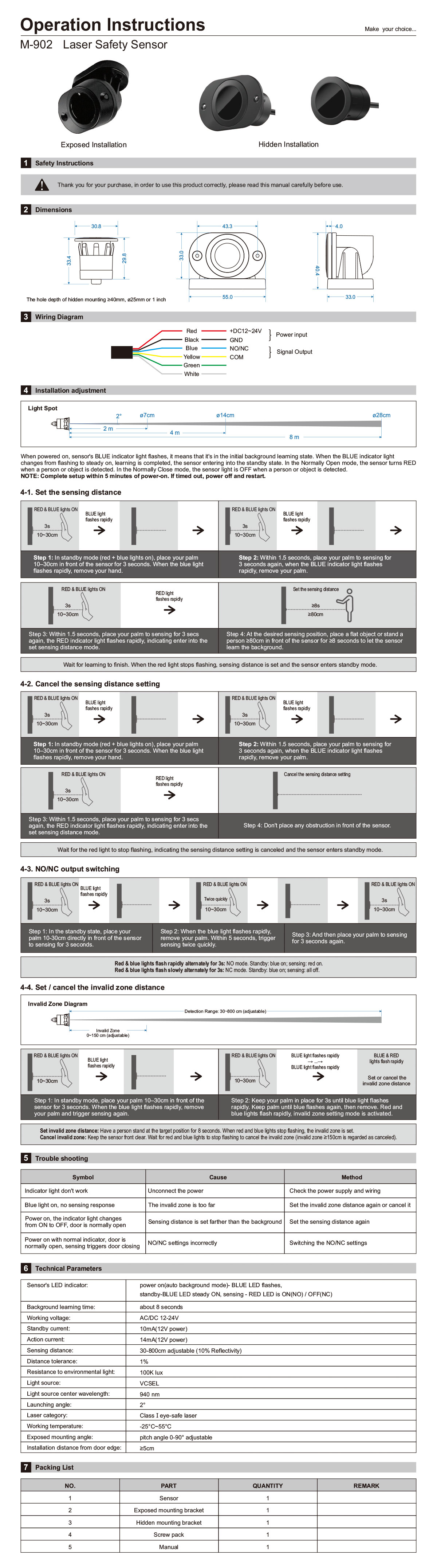
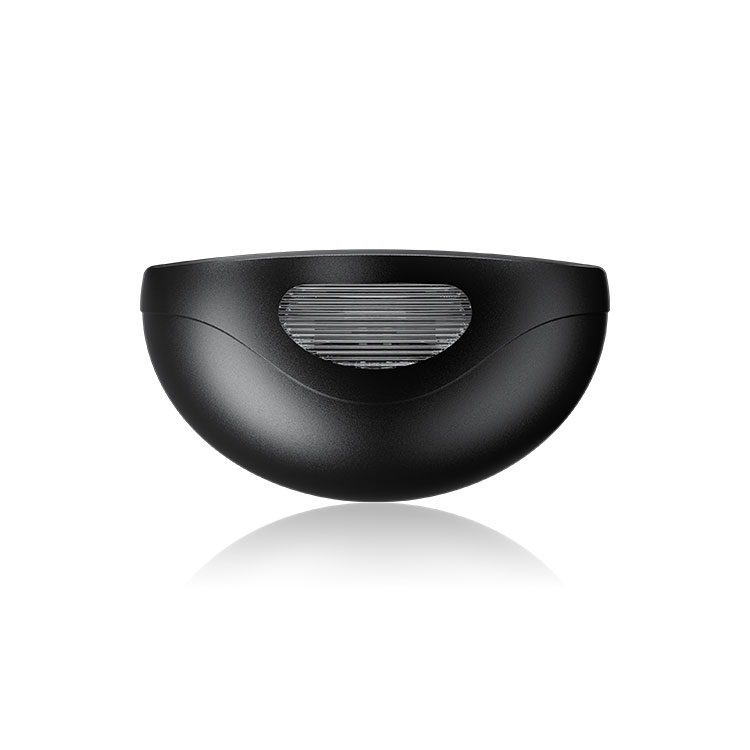
Beam-based safety curtains and laser safety sensors both protect the door leaf; they differ in coverage and adjustment. Laser sensors allow an adjustable scan area and are often used where the opening geometry is awkward or where a wide area must be watched. Beam curtains are straightforward and well suited to standard openings. The right choice follows the opening, not the price list.
Curtains, low-level sensing and the threshold
A safety curtain guards the leaf; it does not, on its own, guard the floor in front of it. The two are frequently confused when a specification is written, with the result that a door is fitted with a curtain across the opening and a low-level gap that nobody addressed. The threshold is exactly where small children, prams, luggage and low objects appear, and it usually needs its own detection.
The workable approach is to decide the protection in layers: the approach for activation, the leaf path for safety, and the threshold for the low zone. Where a single curtain is asked to cover all three, it will be stretched across heights it was not designed for and the gaps will be in the places that matter.
Testing after installation
Safety sensing is worth testing deliberately rather than assumed. Walk a test object through the opening at several heights, from upright adult down to floor level, and confirm the door holds or reopens for each. Check the edges of the opening as well as the centre, because a curtain aligned to the middle can be least effective where the opening meets the frame.
It is also worth recording what settings the door was commissioned with. When a door is later adjusted for a different reason, knowing the safety settings it passed with is the difference between a change and a regression.
Frequently asked questions
Is a safety curtain the same as an activation sensor?
No. Activation starts the door moving for people approaching; the safety curtain watches while the door is moving so it can hold or reopen. Most automatic doors need both functions.
Can a safety curtain replace a low-level presence sensor?
Not usually. A curtain aimed across the opening may not detect a person or object low down, so the low zone normally needs its own detection. Design the two together.
AURWEN supplies safety curtains, safety sensors and laser safety sensors for automatic door systems. Tell us the opening and who uses it and we will suggest a protection layout.