Sep 26, 2026Sensor & Safety Notes
Unidirectional vs Bidirectional Motion Sensors: When One-Way Detection Wins
Unidirectional sensors open automatic doors only for people approaching. Here is how one-way detection works, where it saves energy and annoyance, and when a bidirectional sensor is still the right ca
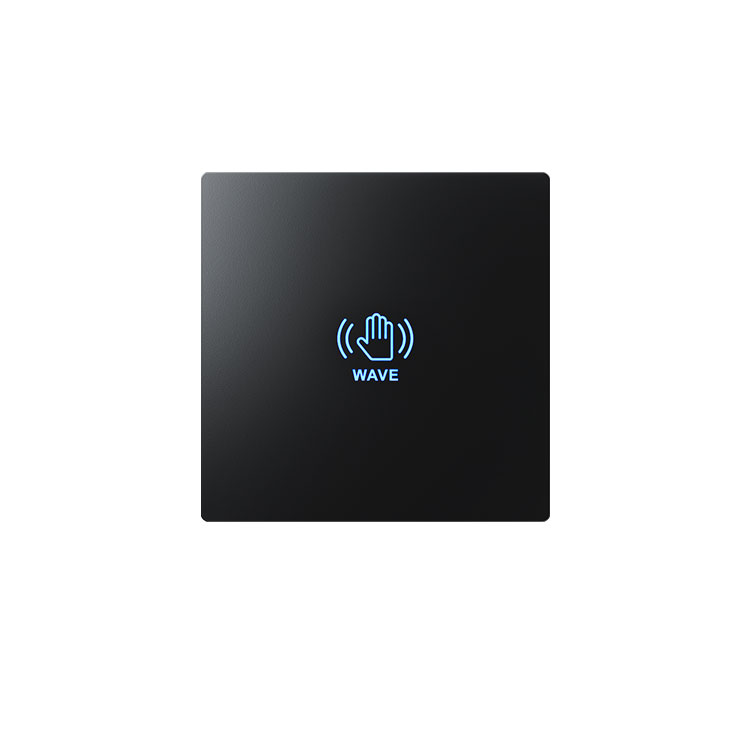
Most door sensors are bidirectional: they detect movement in any direction across the field, and the door opens. Unidirectional (one-way) sensors take a different approach — they specifically detect the approaching signal and shield the departing signal. That single difference changes how an entrance behaves, and for several applications it is exactly what you want.
How one-way detection works
A unidirectional microwave sensor analyses the Doppler signature of moving objects and responds only to targets moving towards the door. Someone walking towards the entrance triggers it; someone walking away past the entrance does not. Manufacturers implement this with intelligent detection circuits that separate approaching from departing reflections and suppress the latter.
Where one-way detection wins
High-speed doors are the classic case. A fast-rolling door beside a forklift route should open for the approaching truck, not for the forklift moving away down the aisle — every unnecessary opening wastes conditioned air and risks self-inductance from the door body's own movement. Manufacturers design unidirectional models precisely for this, to effectively avoid self-inductance of the door body and mis-operation from non-close targets.
Escalators and travelators are another. An escalator sensor should detect people stepping towards it and ignore the ones who have already passed. Unidirectional detection avoids secondary triggering and the nuisance openings it causes.
Street-facing shop entrances benefit too: pedestrians walking past along the pavement (moving across or away from the approach line) stop opening a door they never intend to use.
The trade-off you should know about
One-way detection deliberately ignores departures, so hold time matters more. With a bidirectional sensor, a person leaving re-triggers the door naturally; with a unidirectional sensor the exit relies on the hold time. Models designed for this offer short or adjustable hold times — some unidirectional sensors hold for around one second by default versus two seconds on their bidirectional twins — so check the hold-time specification if exits are as important as entries on your door.
When bidirectional is still right
Bidirectional detection remains the right choice wherever traffic genuinely flows both ways through the same approach path: main entrances of offices, hotels and hospitals, where visitors arrive and depart through the same line, and where missing an approaching person from an odd angle is worse than an occasional extra opening. Bidirectional sensors are also the default where the entrance must double as an accessible exit route with predictable behaviour.
A practical selection rule
Ask one question: does traffic at this door move mainly towards it, or through it in both directions? Towards it (high-speed doors, escalators, pavement-edge entrances) — choose unidirectional. Through it (main public entrances) — choose bidirectional, or a dual-technology sensor if stationary people must also be detected.
Frequently asked questions
Can I convert a bidirectional sensor to unidirectional?
Some sensors offer a unidirectional mode via DIP switch or parameter, but many one-way models are dedicated designs with the shielding built into the detection circuit. Check the model's datasheet rather than assuming.
Does unidirectional detection save energy?
Yes, indirectly: fewer pointless openings means less heating or cooling lost through the doorway. On high-cycle doors the saving over a year is significant.
AURWEN offers both bidirectional and unidirectional microwave sensors, including dedicated one-way models for high-speed doors and escalators. Contact AURWEN with your traffic flow and we will recommend the right detection mode.